
Nature Mindfulness: Where to start
So, while "forest bathing" is its more popular big sister, nature mindfulness is really just about vibing with anything natural. Each spot in nature has its own special way of bringing you peace.

Welcome to the Women Of The Wood blog! This is where we dive into the awesome connection between mindfulness, nature, and keeping life simple. We’re here to share our favorite spaces, personal thoughts, and handy tips to help you soak up the beauty and chill vibes of the natural world. Can’t wait to have you along for the ride!
23 Jan 2026 16:03
So, while "forest bathing" is its more popular big sister, nature mindfulness is really just about vibing with anything natural. Each spot in nature has its own special way of bringing you peace.

As we've said before, chilling by water brings on that "Blue Mind" feeling. Hanging out at the beach or a lake? It’s all about the rhythm. You can match your breathing to the waves or just enjoy the feel of sand or smooth stones. It works wonders for clearing out that "mental chatter."
When you're in a vast space, it’s like getting a big ol' dose of perspective. Looking at an endless horizon or a clear sky gives your brain a nice "visual release." Here, mindfulness comes from soaking in the play of light, the warmth of the sun on your skin, and that awesome silence that lets you really hear your own thoughts.
Breathe in that mountain air! Those epic views can spark some serious awe. Mindfulness on the mountain is all about the journey—feeling the path under your feet and soaking in the stillness at the top. It connects you to this huge, ancient world.
No need to hike miles to get your mindfulness fix! Just one tree on a city street or a tiny patch of grass can do the trick. Mindfulness in the city is about noticing the little things—like the soft feel of a leaf against the hard concrete, or how nice it is to hear a bird chirp over the city buzz.
Mindfulness in your garden is all about being present and appreciating the beauty around you. Notice the colours, textures, and scents of the plants you have. Observe how the sunlight filters through the leaves, creating intricate patterns on the ground. Even simple tasks like weeding or watering can become a mindfulness practice.
Science is catching up with what we've known all along—taking your mindfulness practice outdoors comes with some awesome perks:
The "Nature Pill": Just 20 minutes in nature can really help lower cortisol levels (yep, that pesky stress hormone).
Attention Restoration: Nature’s got this "soft fascination" thing going on. It grabs your attention without draining your energy, so your "focus muscles" can finally take a break.
Boosted Creativity: Unplugging and checking out the random, beautiful patterns in nature? It’s like kicking your creative brain into gear.
Immune Support: Especially in those leafy green spots, breathing in phytoncides (that’s plant speak for some cool natural stuff) can give your immune system a nice boost.
Next time you step outside—even if it's just to walk to your car or take out the trash—try this:
Stop for 60 seconds. Find one thing you can hear, one thing you can smell, and one thing you can see that is part of the natural world (a cloud, a weed in the sidewalk, the wind).
That’s it. You’ve just practiced mindfulness!

23 Jan 2026 16:03
So, while "forest bathing" is its more popular big sister, nature mindfulness is really just about vibing with anything natural. Each spot in nature has its own special way of bringing you peace.
When you think of "mindfulness," you probably picture some zen monk chilling on a mountaintop or someone sitting cross-legged in a spotless room. Sure, it looks peaceful and all, but let’s be real—who has time for that with busy lives, messy homes, and thoughts racing like they’re in a marathon?
The awesome news? Mindfulness isn't about running away from your life; it’s about being right there in it.

Mindfulness is really just about tuning in to the here and now, on purpose, with a sense of curiosity instead of judgment.
Imagine your mind as a playful puppy. Those little furballs love to explore! They see a squirrel (maybe a not-so-great memory) and chase it. They sniff out a treat (hello, meeting anxiety) and off they go. Mindfulness is like gently picking up that puppy and putting it back on track.
To make it easier to get, let’s break mindfulness down into three simple bits:
Ever drive home and realize you can’t remember the last five miles? That’s our brains on Auto-pilot. Mindfulness is about being aware of the weight of the steering wheel, the sunlight filtering through the trees, and the feel of your feet on the ground.
Mindfulness doesn’t just happen out of the blue. It’s a choice! It’s the moment you decide to put down your phone or hit pause on that mental drama to check in with reality.
Here’s the trickiest part! When our minds drift off, we often think, "Ugh, I’m terrible at this." But with mindfulness, we say, "Oh hey, my mind's wandering again. How interesting!" You simply notice the thought without attaching a judgment to it.
So why should we "train" our brains this way? Because our brains have a "Negative Bias." We’re wired to spot problems and threats. Mindfulness helps reshape the brain to:
Lower Stress: It calms the "Amygdala" (that alarm system in your brain).
Increase Focus: You’re literally working out your attention muscle.
Emotional Resilience: It creates a pause between a stressful event and your reaction. Instead of losing it, you get to choose how to respond.
You don’t need to set aside 20 minutes of silence to be mindful. You can do it right here and now with the 5-4-3-2-1 Technique:
Just take a moment to notice:
5 things you can see (Like the texture of your desk, a speck of dust, or a plant).
4 things you can feel (Your back against the chair, your hair tickling your neck).
3 things you can hear (The hum of the fridge, a car driving by).
2 things you can smell (Like coffee brewing, fresh air, or your laundry detergent).
1 thing you can taste (Even if it’s just the taste of your mouth!).
The Takeaway: Mindfulness isn’t about "emptying your mind." It’s all about filling your awareness with the life you’re living right now!
.
19 Jan 2026 19:19
Click here to add text.
22 Jan 2026 19:12
Hey, have you ever noticed how our lives are just packed with noise? You've got traffic, your phone buzzing all the time, and even your own thoughts getting loud! But what if I told you that one of the best ways to chill out is just outside your window and totally free?
Let’s dive into the magical world of birdsong!
Listening to the sweet songs of robins at sunrise and the lively chatter of sparrows during the day isn’t just a nice way to spend your time; it’s also a great way to practice mindfulness and boost your well-being. Let’s dive into how these feathered friends can really help us feel our best!

Life moves fast, right? We’re constantly caught up in thinking about past goof-ups or stressing over what’s next. That’s where mindfulness comes in—it's all about gently reining your focus back to what’s happening now. And guess what? Birdsong is a fantastic way to anchor yourself!
An Invitation to Pause: When a bird sings, it's like a gentle nudge to stop what you’re doing, listen, and just chill for a moment. You don’t need fancy meditation stuff—just open those ears!
Sensory Focus: Check out the cool patterns and different calls of each bird. This little practice helps you tune in and notice sounds without any judgment—just let them flow over you.
A Sense of Belonging: Birdsong reminds us that we're part of something bigger—a lively ecosystem. It connects us to nature and life’s cycles, bringing in that warm sense of peace and belonging.
Mindful Moment: Give this a shot—next time you catch a bird singing, close your eyes for 30 seconds. What do you hear? Is it one bird or a choir? Is it a high-pitched tune or a low hum? Just listen, no need to play detective!
Listening to birds isn’t just a nice thing to do—it’s actually good for you! Scientists are catching up to what folks have known for ages: nature is healing.
Stress Reduction: Research shows that listening to natural sounds like birds can lower your cortisol levels. It calms you down, slows your heart, and releases that muscle tension. Think of it as nature’s chill pill!
Improved Mood: Hanging out in nature and tuning into birds can boost your mood, relax you, and even help with anxiety or depression. It’s like a joy delivery straight to your brain.
Enhanced Focus & Cognitive Function: Believe it or not, the soothing sounds of birds can actually help you concentrate better. Unlike the noisy chaos of the city, these gentle sounds help your brain chill out, making it easier to focus. Some studies suggest it helps clear that brain fog!
Better Sleep: Adding mellow bird sounds to your bedtime routine can help you drift off easier. It signals your primitive brain that it’s safe and time to relax.
No need to be an expert birdwatcher to enjoy these perks!
Open Your Window: Even if you’re in the city, you might be surprised by the sweet birdsong you can catch.
Take a Walk: Hit up a park, local green space, or even just step into your backyard.
Mindful Mornings: Get into the habit of stepping outside or cracking a window for five minutes while you sip your morning coffee. Just listen!
"Sound Bath" Your Space: If you can’t get outside, there are loads of awesome bird sounds online that you can let play.
So next time you hear a chirp, trill, or warble, don’t let it slip by. Take a moment. Listen. Let those feathered friends bring you back to the now, ease your mind, and boost your spirit. It’s a simple act but can make a world of difference.
Click on the button below to hear the birds of Stockwood Open Space on my recent visit.
Birds included Robin, Blue Tit, Redwing, Blackcap, Great Spotted Woodpecker, Blackcap, Blackbird, Great Tit, Song Thrush...

In the world of birdwatching, it’s often the flashy hawks or the vibrant woodpeckers that grab our attention. But for those of us practicing mindfulness, there is no better teacher than the Wren.
Small enough to fit in the palm of your hand, yet bold enough to sing over the roar of a waterfall, the wren is a tiny powerhouse of presence. Let’s get to know this "King of Birds" and see what it can teach us about living a big life in a small space.

The wren (you know, the Eurasian Wren or Winter Wren) is super sneaky. If you wanna spot one, you’ve got to take it easy—perfect for those chill observation vibes.
The Silhouette: Look for a tiny, round, "dumpy" body with a short tail that’s always cocked up at a cute angle.
The Colors: They rock a cool mix of russet browns and creams, with pretty dark stripes on their wings and tail.
The Movement: Forget soaring; wrens bounce around like little mice. They hop through the low stuff, vanishing into nooks and popping out like little acrobats.
Wrens aren’t picky eaters, but they love a bit of cozy chaos. You’ll usually find them where there’s plenty of cover to chill in.
In the Wild: They dig woodlands, hedgerows, and rocky moors.
In the Garden: They often hang out at log piles, ivy-covered walls, and those dark, secret spots in your garden shed.
Mindful Tip: Next time you’re outside, skip the treetops. Check out the shadows—the tangled roots and piles of leaves. That’s the wren’s territory. It’s a reminder that beauty and life are often hiding in the overlooked places.
The coolest bit about the wren? Its voice! For a bird that’s about the same weight as a 1 pound coin, its song is crazy loud.
The tune is a fast, ringing mix of clear notes topped off with a long, cheerful trill. Since they hang out in dense spots, they’ve got to belt it out to be heard over the leaves.
Listen closely: To someone who’s tuned in, the wren’s song is all about taking up space. It reminds us that you don’t have to be “big” to have a loud voice or make a splash in the world.
Even though it’s tiny, folklore all over Europe calls the wren the "King of Birds." One popular story is about a contest to see who could fly the highest. The Eagle thought he was the winner. But hidden in those feathers was a little wren. Just as the Eagle started to tire, the wren hopped out and flew a little higher.
The Wisdom of the Wren:
Intelligence over Brawn: You don’t always need a ton of energy or muscles to hit your goals; sometimes, you just need a bit of cleverness and a well-timed jump.
Protection: In lots of cultures, the wren was seen as a “sacred” bird. Having one nest nearby was thought to bring good luck and protection.
The next time you feel small, overwhelmed, or "brown" among the bright colors of the world, remember the wren.
It lives in the shadows but sings in the light. It is tiny, yet it is a King. It doesn't need much space to be exactly who it is meant to be.
"A russet spark in the garden’s shade, A tiny king in a coat of tweed, Between the roots where the moss is laid, He finds the space that he needs to lead.
With a tail held high like a jaunty sail, He scuttles deep where the ivy weaves, He doesn't fear that he’s slight or frail, As he hunts for life beneath the leaves.
Then suddenly—a golden sound! A song so bright, so sharp, so clear, It shakes the dew from the silent ground And commands the waking world to hear.
A mountain of music in a thumb-sized chest, He teaches us what the soul can do: That even in shadows, we find our rest, And even when small, our voice rings true."
We’ve all been there. You’re grabbing a coffee or passing a mate in the hallway and the "Standard Script" kicks in: "Hey, how’s it going?" "Yeah, good thanks. You?" "Not bad!"
And... scene. 🎬
We do it so often it’s basically a reflex, like blinking. But if we’re being honest, half the time we aren't even listening to the answer, and the other person isn't really telling the truth. From a mindfulness vibe, this is a total missed opportunity to actually connect.
Here’s why ditching the auto-pilot and asking "How are you?"—and actually meaning it—is a low-key game changer for your mental health.

We've all experienced it, right? You're grabbing a coffee or bumping into a buddy, and the "Standard Script" rolls out: "Hey, how’s it going?" "Yeah, good thanks. You?" "Not bad!"
And... cut! 🎬
We say it so often it's practically a reflex, like blinking. But come on, let’s be real—half the time we’re not even listening to the response, and the other person isn’t being totally honest. From a mindfulness angle, it's a missed chance to actually connect.
Here’s why switching off the auto-pilot and asking "How are you?"—and actually meaning it—is a total game changer for your mental health.
Mindfulness sounds all fancy, but it’s really just not acting like a zombie. When we ask without caring about the answer, we’re just cruising on "Auto-Pilot." We’re stuck thinking about our next meeting, what to have for dinner, or that embarrassing thing we said three years ago.
But if you stop, look someone in the eye, and ask for real, you’re hitting the "pause" button on the chaos. It forces you to be right here, right now.
It’s a Stress-Killer: Real connections release oxytocin (the "hug hormone"). It helps the other person feel seen, and it actually calms your nervous system down, too.
It Builds a Safety Net: When you’re the one who really listens, folks feel safe with you. That creates a circle of support, so when you’ve had a rough day, that bridge is already there.
It’s a Reality Check: Sometimes we get so stuck in our own heads that we forget everyone else is out here living a totally complicated life, too. It gives you perspective.
You don’t have to turn it into a full-on therapy session. Just tweak it a bit:
The "Stop and Drop": Don't ask while you're walking away. Stop for a sec. Give them your full attention. It’s a small move that says, "I’ve actually got time for you."
Change It Up: Since "How are you?" is basically just a greeting now, try mixing it up:
"How’s your head space today?"
"What’s been the best or worst part of your week so far?"
"Honestly, how are you actually doing?" (Adding "actually" is the secret sauce).
The "Comfortable Silence": If they say "I'm fine," but their face tells a different story, give it a moment. Sometimes a two-second pause is all someone needs to realize, "Oh, they really want to know," and then the real talk happens.
Next time you're about to throw out the usual "How are you?", ctually to stay present for the answer. Don’t get lost in your next response. Just listen to their voice, check out their face, and be there.
It’s a tiny act of mindfulness that makes the world feel a little less lonely and way more human.
Here are a few ways to reach out that feel low-pressure but meaningful. The key is to give them an "out" so they don't feel guilty if they’re too busy to reply right away.
"Hey! Just wanted to send some good vibes your way. No need to reply, just hope your week is going okay!"
"Thinking of you today! Hope life is treating you well. Let's grab a coffee/catch up properly when things settle down on your end."
Send a meme, a song, or a photo of a place you visited together: "Saw this and it reminded me of that time we [insert memory]. Hope you're doing great!"
"Randomly thought of you today—hope you're having a brilliant week!"
"Hey, I realized it’s been a minute since we actually chatted. How’s your head space been lately? Sending love."
"I know things have been hectic for you lately, just wanted to check in and see how you’re actually doing. Coffee is on me whenever you're free."
"Hey! I just saw [TV Show/Book/Movie] and immediately thought of you. How have you been? We’re overdue for a catch-up!"

We’ve all been there: you look out the window, see a gray sky and a steady drizzle, and immediately decide to cancel your walk and curl up on the couch. While cozying up is great, there’s actually a hidden magic to the rain that we often miss.
Instead of seeing rain as a reason to stay in, what if we saw it as an invitation to experience the world differently? Here is why "chasing the clouds" might be exactly what your mental health needs.


In the world of mindfulness, grounding is the practice of connecting with the present moment through your senses. Rain provides a sensory symphony that clear days just can’t match:
The Sound: The rhythmic pitter-patter of rain is a natural form of "pink noise," which has been shown to improve sleep quality and reduce cortisol (the stress hormone).
The Smell: Have you ever noticed that amazing scent right after it starts raining? That’s called petrichor. It’s caused by the release of plant oils and soil compounds, and for many, it triggers a deep, evolutionary sense of calm.
The Feel: The sensation of cool mist on your face can snap you out of a "brain fog" and make you feel instantly more alert and alive.
Walking in the rain is a gentle lesson in radical acceptance. When we go out in the sun, we are in control. When we go out in the rain, we have to accept that we might get a little wet, that the path might be muddy, and that things are a bit unpredictable.
Embracing the elements helps build emotional resilience. It teaches us that we can be uncomfortable or "messy" and still be perfectly okay.
On a sunny day, the parks are packed and the streets are loud. But when it rains? The world goes quiet.
Psychologists often talk about Soft Fascination—a state where your attention is held by easy, low-stimulus environments (like watching ripples in a puddle or mist moving through trees). This allows your "directed attention" (the kind you use for work and screens) to rest and recharge, significantly reducing mental fatigue.


Ever Notice how moss gets even brighter when it/s rained?
Invest in good socks - Wet feet are the quickest way to ruin the mood. Wool stays warm even when damp!
Leave the umbrella - If it's a light rain, try a hooded raincoat instead. It keeps your hands free and feels more immersive.
Look for "Rain-Glow" - Notice how colors (especially greens and greys) look more saturated and vivid against the wet pavement.
The Hot Drink Reward - The best part of a rainy walk is the feeling of coming home. That post-walk tea or coffee hits differently when you've earned it.
Rain shouldn't be a barrier to your well-being; it’s just a different kind of beauty. Next time the clouds roll in, grab your coat and head out for fifteen minutes. You might find that the "bad" weather is actually the best medicine.
10 Jan 2026 20:38
Ever have one of those days where everything feels like too much? Your inbox is overflowing, your to-do list is endless, and your brain’s juggling what feels like 147 tabs at once. Sound familiar?
8 Dec 2025 20:24
When the temperature drops and the bright greens of summer turn into shades of slate, taupe, and copper, it’s pretty tempting to just stay cozy under a blanket until April rolls around. Let’s be honest, we often see winter as something to "get through" instead of something to actually enjoy.
1 Dec 2025 12:19
Growing up as a total nature-loving kid, I figured diving back into the great outdoors would be a no-brainer. I mean, I’ve always been all about trees, and running water has always been my thing. But wow, when I look back at the photos from my first few trips into the woods, it’s pretty obvious I became completely hooked on something new—mushrooms and lichen!
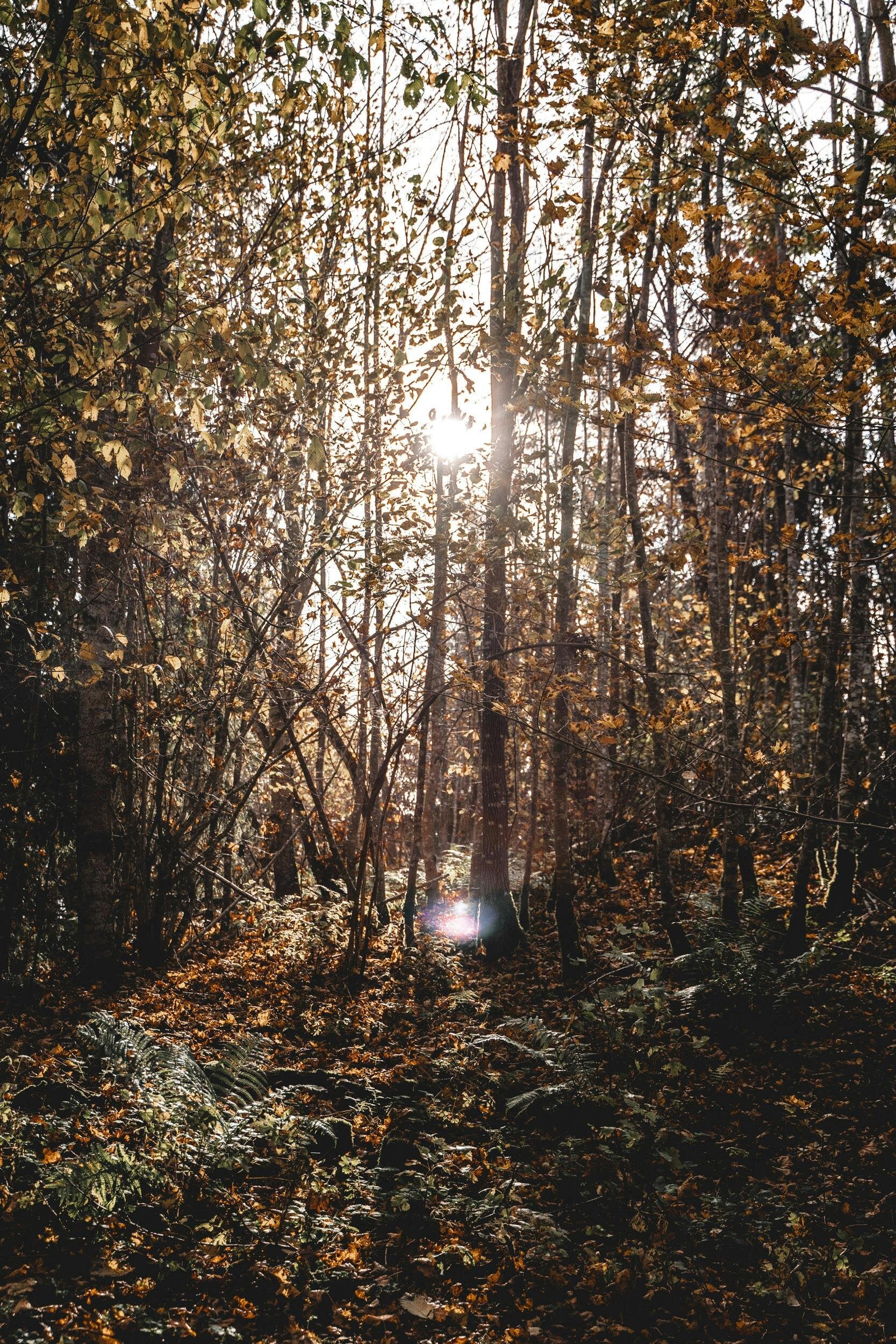
Discover how mindfulness practices can deepen your connection with nature, enhancing your well-being and fostering a sense of inner peace. Our blog explores various techniques and insights to help you cultivate mindfulness amidst the serene embrace nature..

Explore the joys of simplifying your life and reconnecting with nature's rhythm. From decluttering your space to cultivating mindful habits, our blog offers practical tips and inspiring stories to help you create a more intentional and fulfilling life.

Ready to immerse yourself in the wonders of nature and experience the transformative benefits of forest bathing? Book a session with Women Of The Wood today and embark on a journey of self-discovery and rejuvenation.